ASB BakingTech 2026 left us feeling genuinely energised. More than just another industry event, it was a powerful reminder of how much the baking world is built on strong relationships, resilience, and integrity.
From technical deep dives to fascinating insights into consumer psychology, every session offered something practical to take away and plenty to reflect on going forward.
After three days in Chicago, here’s what stood out to us.
Kudos Blends on the Formulation Floor: Natural Colours and Sodium in Focus
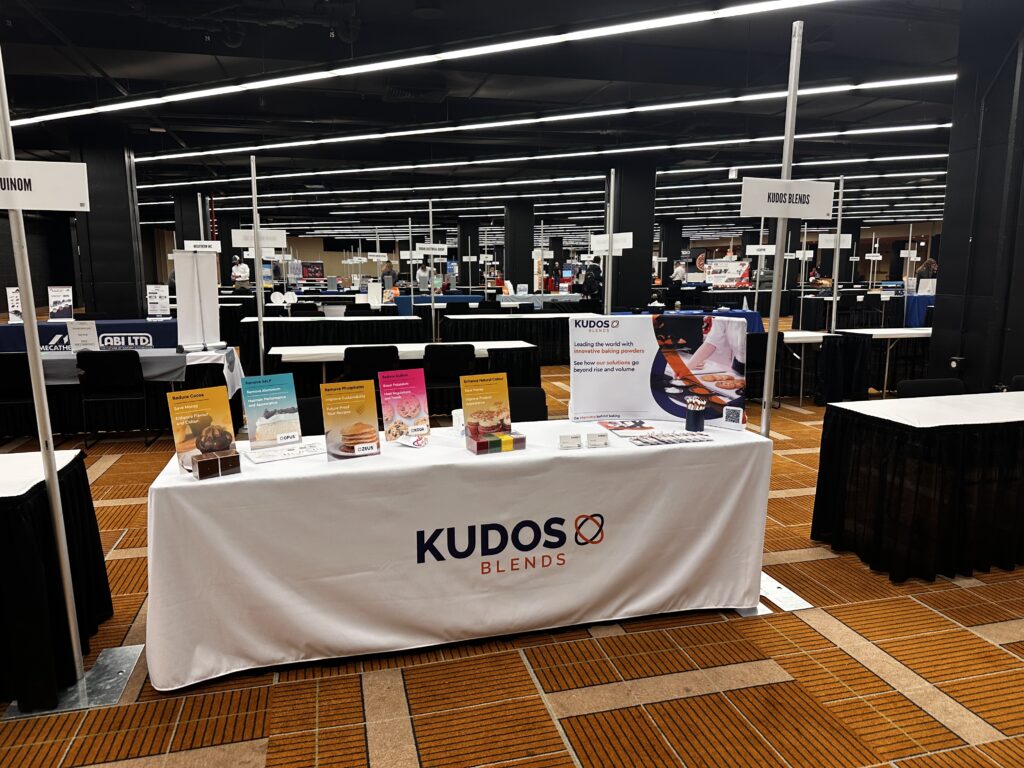
At this year’s event, we went in with two clear aims. To showcase the innovative bakery solutions shaped by our customers’ needs, and to really listen, engage and connect with the people driving our industry forward. We wanted to understand what’s on the minds of bakers right now and where the real pressure points are. Which challenges continue to prove stubborn, and how are shifting regulations and evolving consumer expectations shaping decisions? What followed were open, honest conversations that highlighted just how much the industry is navigating at once.
One of the most prominent discussions at our tabletop centred around the increasing scrutiny of petroleum-based food dyes. Interest in natural colour solutions was big, with bakery brands actively tracking reformulation commitments in line with guidance from the U.S. Food and Drug Administration. This aligns closely with the wider industry push towards ‘cleaner labels’ and ingredient transparency, an area where ZEUS™ ColourMax conversations were particularly relevant and well-timed.
Sodium reduction was also a recurring theme throughout the event, reflecting both regulatory and public health awareness. In the US, the FDA has had voluntary, phased sodium reduction targets in place since 2021, designed to gradually lower sodium intake across the food supply, encouraging manufacturers to reformulate over time rather than implement abrupt changes. Alongside this, the United States Department of Agriculture school meal sodium targets are adding additional urgency for reformulation, with further phases due to take effect by summer 2027. The sodium reduction clock is ticking, meaning the time to reformulate is now.
Within the bakery industry, it is widely recognised that sodium reduction cannot always be achieved by simply removing salt, due to salt removal impacting flavour, shelf-life and possible structure issues. Chemically leavened products in particular require a technical, systems-based approach, as sodium often contributes to both flavour and functional performance through leavening acids and bicarbonates. A recent Baking & Snacks article highlighted this formulation-wide perspective and referenced our KODA™ potassium bicarbonate as one of the practical tools available to support sodium reduction in leavened baked goods, for example sweet baked goods may not contain high levels of salt, but high levels of sodium do come from the sodium-containing chemical leavening ingredients, such as baking soda. KODA™ potassium bicarbonate offers formulators the ability to reduce sodium while maintaining gas release, volume and crumb structure in those baked goods.
Alongside the strong interest in natural colour and sodium reduction at our tabletop, the wider programme highlighted other pressures and opportunities facing our industry. Across seminars, panel discussions and informal conversations, several additional trends came through clearly.
What Else is the Industry Talking About
1. The Fibre & Protein Revolution
For the past decade, protein has been a dominant marketing driver with many products increasing protein levels to appeal to consumer trends. However, conversations at BakingTech suggested a shift. Following on from the “protein push”, added fibre is emerging as a strong focus area. Flour millers, such as Bay State Milling Co., are actively optimising blends to incorporate fibre functionality, responding to consumer interest in digestive health and satiety benefits, which Colleen Zammer spoke passionately about in her technical breakout session.
2. Consumer Perspectives
During a morning session, Kevin Ryan led a keynote discussion around “The Ultra Processed Panic” that was particularly insightful. As ultra-processed foods come under increased scrutiny, the bakery industry has both a challenge and an opportunity with regard to new formulations and innovation.
Scientific understanding around nutrient-rich foods, the influence of GLP-1 related appetite changes, and a more digitally informed consumer base are all contributing to this shift.
3. Back to Basics
Another regular message that kept resurfacing was to go back to fundamentals. Not in a nostalgic or regressive way, but with a more intentional, grounded thought process. There was a strong sense that, as an industry, we sometimes move quickly towards the next trend without fully interrogating the “why” behind it. Several speakers challenged that thinking, encouraging us to understand our consumers more deeply, ask better questions, and build products around genuine purpose rather than short-term marketing momentum. The idea is to reflect a more informed and conscious consumer, one who wants to understand what’s in their food, how it’s made, and how it fits into their wider lifestyle.
4. Scaling Up Without Compromise
One of the most refreshing sessions attended was a talk on Product Integrity in Commercial Production by Chris Prociv at Aspire Bakeries.
Despite their scale, Aspire presented first and foremost as bakers. Passion for flour, fermentation, structure and process integrity was front and centre.
Chris focused on their La Brea Bakery brand and demonstrated how it had built its manufacturing model around its product, not the other way around.
The foundations were simple: flour, salt and water. The discipline was in protecting those fundamentals at scale.
It was a powerful reminder that growth does not require dilution. In fact, authenticity appears to be a commercial advantage when aligned with strong consumer insight, especially when talking about the shift in consumer perceptions and ultra-processed foods.
Community & Relationship Building
Beyond the learnings and technical sessions, one of the greatest strengths of Chicago BakingTech was the community.
We were proud to attend events hosted by the Society of Bakery Women (SBW), an organisation we have supported for many years. The SBW brunch offered meaningful conversations as well as the opportunity to meet the next generation of bakery professionals.
ASB’s small-group dinners at local restaurants were another highlight. These evenings allowed genuine connection across roles, from R&D and operations to marketing and equipment. Conversations extended far beyond immediate job niceties and offered a fresh perspective on shared industry challenges, with a refreshing personal touch.
More relaxed events, such as the BBQ bash with garden games, created an open and welcoming atmosphere, ideal for new introductions and reconnecting with familiar faces.
Time on our stand also led to exciting discussions with both students and professors. The door is certainly open for future collaboration, and it is encouraging to see the level of innovation coming from academic institutions.
Ultimately, the ASB community is filled with positivity and left us wanting to be more involved next year, as well as keep the conversations going with new peers and friends.
Final Reflections
Chicago BakingTech 2026 reinforced that the bakery industry is evolving, but not abandoning its roots.
We saw:
- AI is entering the mainstream as a collaborative tool for companies to utilise
- A consumer shift towards whole ingredients and more transparency
- A stronger focus on natural colours and regulatory awareness
- A more strategic, formulation-wide approach to sodium reduction
- Continued passion for craft, even at an industrial scale
- Most importantly, we saw an industry willing to ask better questions.
For us, it was a valuable few days of learning, connection and reflection, and a reminder that while technology and regulation shape our future, it is people, relationships and curiosity that drive real progress.