
Contents
Summary
Recreating the vibrant colour traditionally achieved with synthetic reds, such as Red 40, provides an exciting opportunity for innovation in baking. Beetroot is a widely used and effective source of natural red colouring, thanks to its pigment betanin, which delivers a vibrant red hue. Although this natural pigment is sensitive to heat and pH during baking, Kudos Blends’ ZEUS™ technology has enabled us to successfully preserve its intensity, achieving bright, stable red shades using natural ingredients.
It delivers these results with a phosphate-free baking powder and no compromise on product quality.
What ZEUS™ ColourMax Can Do for You
- Unlock the potential of natural red colouring to rival synthetic colour performance
- Create vibrant and memorable bakes to entice customers and drive increased sales
- Provide a phosphate-free alternative to traditional baking powders
Our ZEUS™ ColourMax baking powder can be used with a wide range of natural colours to achieve optimum hues and elevate the stability of natural colours in baked goods, on top of providing the rise and texture that a baking powder brings.
Background
The classic red velvet cake remains a popular choice in bakeries and retail ranges, where its signature bright red crumb defines its appeal. The early versions of these cakes relied on the reaction between cocoa and acidic ingredients, such as buttermilk or vinegar, to produce a reddish-brown hue. By the mid-20th century, cocoa in the US was Dutch-processed, which is alkaline. This neutralised the acidity of the cake, preventing the natural red hue. Around this time, Adams Extract, a food dye manufacturer, marketed a vibrant red velvet cake with a recipe using their red food dye. In the aftermath of wartime rationing, this bright red luxury cake appealed to consumers to the point that the red velvet cake became ubiquitous with the bright red colour. After a drop in popularity in the late 20th century, the red velvet cake has undergone a resurgence in recent years and is a staple in luxury bakeries.
Ever since red velvet cake became popular again, concerns about the health impacts of synthetic red dyes have steadily emerged. Red 3 (erythrosine) was banned in most countries in the 90s over concerns that it may be carcinogenic. Red 40 (Allura Red) is linked to hyperactivity in children, and its use is restricted in many countries. In the EU and the UK Regulation (EC) No. 1333/2008 stipulates that food containing Red 40 (E129) must contain the warning “may have an adverse effect on activity and attention in children.” As well as the Food and Drug Administration (FDA) in the USA announcing plans to phase out petroleum-based synthetic dyes, including Red 40, by the end of 2026. Some states have already banned its use in food intended for schools.
While natural and plant-based colourants have been part of the bakery sector for many years, evolving legislation has intensified the industry’s focus on their wider implementation. Carmine, made from dried and crushed Cochineal beetles, is a natural red dye used widely in the bakery industry. Although it provides a vibrant red and is from a natural source, it is not acceptable to certain religious groups or those following a meat-free diet, and it is known to trigger allergic reactions in some individuals.
Plant-based alternatives offer a more inclusive and sustainable solution. Natural reds can be obtained from anthocyanins found in berries, sweet potatoes, and purple carrots, as well as from carotenoid pigments (such as paprika) and betanin from beetroot. These ingredients allow bakers to meet consumer demand for clean-label products and visually appealing baked goods.
Challenge
Despite their promise, plant-based reds pose technical challenges in baking. Betanin, the primary pigment in beetroot, is highly sensitive to heat and pH, and can degrade during baking, often causing the colour to shift toward brown.
To address this, manufacturers can either increase the amount of colourant, raising production costs, or lower the cake’s pH using an acid. However, adding more acid can interfere with leavening, causing premature gas release that affects the rise and structure of the final product, making the baking process more challenging for manufacturers.
Solution
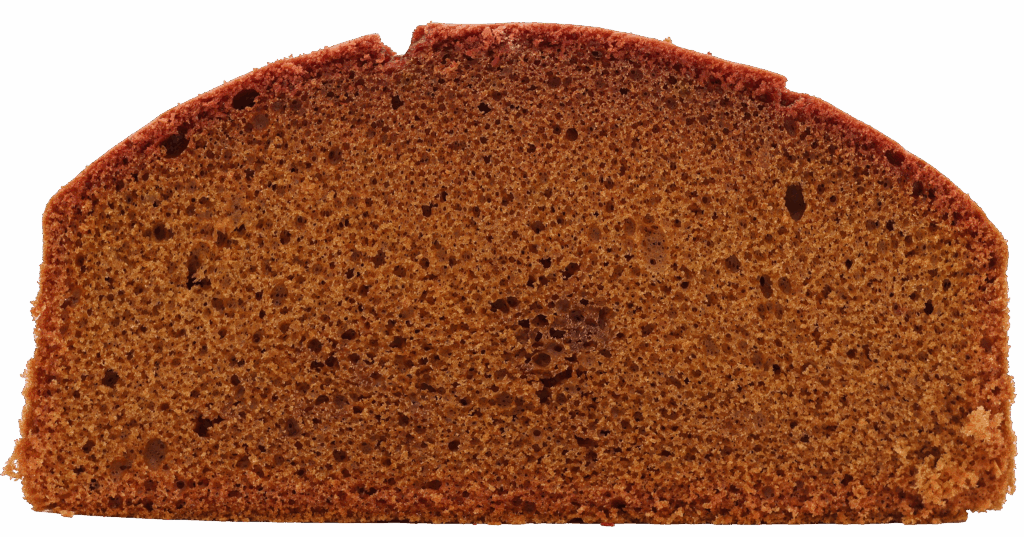
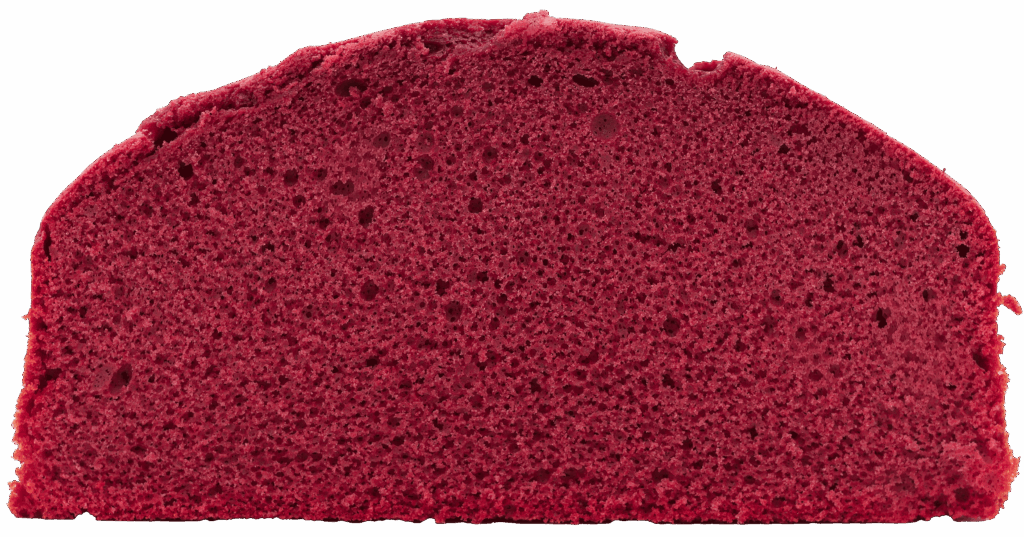
ZEUS™ ColourMax is formulated to protect natural colour pigments, including betanin. To demonstrate the effectiveness of ZEUS™ ColourMax, red velvet cakes with natural beetroot colours were baked using standard baking powder and ZEUS™ ColourMax. The only ingredient altered in these recipes was the baking powder.
Standard Baking Powder
ZEUS™ ColourMax
| Standard Baking Powder | ZEUS™ ColourMax | |
| Lightness | 71.24 | 38.37 |
| A (Green – Red) | 2.79 | 49.13 |
| B (Blue – Yellow) | 57.18 | 38.43 |
| Delta E | 59.8 | |
Delta E is a metric used to quantify the difference in colour between two objects or samples
ZEUS™ ColourMax preserved the vibrant red of betanin throughout baking, delivering naturally bright, stable colour where standard baking powders allowed browning. This can be seen in the Delta E, which describes the difference in colour between the cakes. A Delta E of 59.8 indicates a very large, highly perceptible difference between the colour of the cake made with a standard baking powder and the ZEUS™ ColourMax cake. The cakes are significantly different colours.
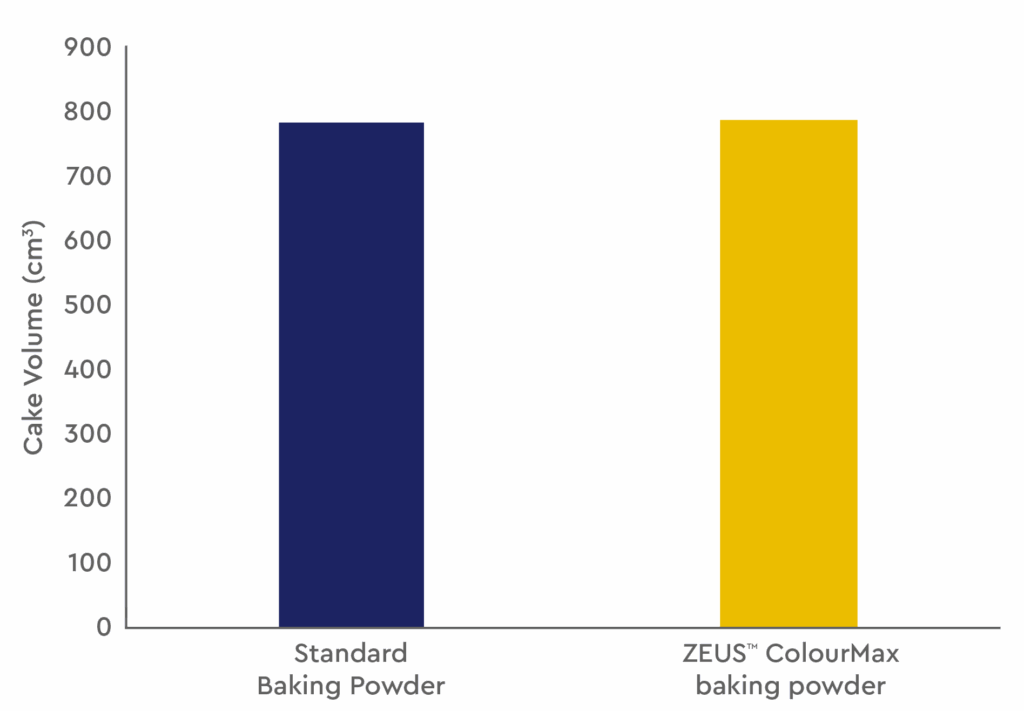
This vibrant colour was achieved without compromising on the volume or texture of the cake, which was comparable to the standard baking powder.
Cake Volume
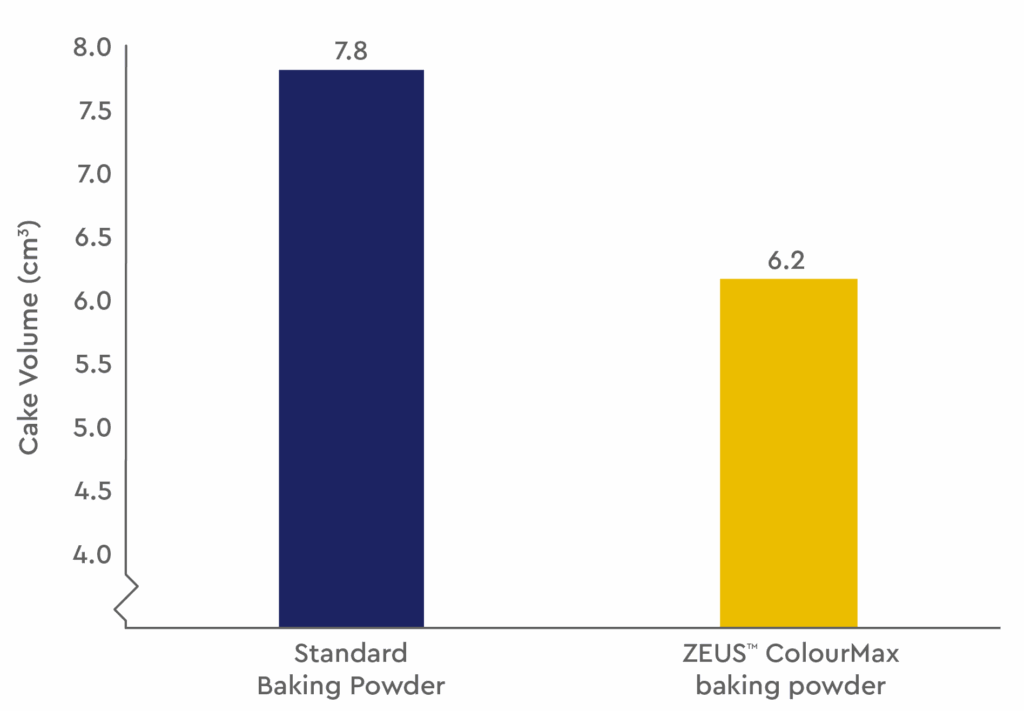
Betanin is most stable in acidic conditions as a pH of above 7.5 causes it to degrade. Most baked goods have a pH around neutral unless additional acids are added. This lower pH helps the betanin pigments to retain their bright colour.
pH
Many natural colour pigments, including betanin, are highly prone to oxidation. The conditions during baking will accelerate this process. The formulation of ZEUS™ ColourMax protects the pigments, both during baking and when the cake is on the shelf.
Along with its natural colour-enhancing properties, ZEUS™ ColourMax is a phosphate-free alternative to traditional baking powders. It matches leavening performance while its pH-lowering capacity extends shelf-life, making it a versatile solution for naturally vibrant, high-quality baked goods.
Conclusion
With legislation and consumer demand driving the shift toward natural colours in bakery products, ZEUS™ ColourMax offers a powerful solution. It significantly improves the stability of natural pigments, allowing bakers to achieve a vibrant, clean-label red velvet cake with less colouring, reducing costs. In addition, ZEUS™ ColourMax is phosphate-free, supports reliable leavening, and can help extend shelf-life, delivering consistently high-quality baked goods that meet both regulatory and consumer expectations.
If you’d like to learn more about how ZEUS™ ColourMax can help you to increase the natural colour vibrancy of your bakes, get in touch with our experts today.